YOUR BODY ISN'T BROKEN. IT JUST NEEDS A BETTER STRATEGY. Fix the movement patterns holding you back so you can build
- Workout logging, scheduling, and more
- Videos for each exercise
- One of the best rated apps (⭐️4.9/5)
Programs
PRIME SQUAT: Fix Your Foundation
Discover what's limiting your squat and learn how to improve hip mobility, core control, stability, and strength with a step by step 4 week corrective training system.
PRIME SQUAT
OffersStop guessing which stretches and exercises to do.
PRIME -SQUAT (Fix Your Hip Shift in 4 Weeks)
Squat Test: To identify the main compensation pattern before training.
Each fail has its own corrective focus:
Elbows fall or upper body loses position
Upper cross, thoracic extension, scapular control, external rotation, rib cage position
Hips shift
Asymmetrical hip control, internal rotation, adductor control, glute med, pelvic stability
Your Squat Test is not about passing perfectly. It is about seeing how your body is organizing movement before you train.
Different compensations mean different needs.
If your elbows fall, we need to address your upper back, shoulders, ribs, and posture.
If your hips shift, we need to address side to side hip control.
If your knees cave in, we need to activate your glute med and improve foot control.
If your knees bow out, we need to restore adductor control and internal rotation.
If your feet turn out, we need to improve hip internal rotation, ankle mobility, and foot tripod.
If your heels lift, we need more ankle dorsiflexion and foot strength.
If you cannot reach depth, we need to open the hips and ankles and build confidence in the bottom position.
If your pelvis tucks under, we need better bracing, pelvic control, and usable squat depth.
If your ribs flare or your core disconnects, we need breathing, bracing, and top rib integration.
The goal is to choose the right preparation for your body that day so you can train with better movement, better control, and less compensation.
Knees cave in
Glute med, external rotators, foot tripod, femur control
Knees bow out
Adductor weakness, internal rotation access, pelvic control
Feet turn out
Limited hip internal rotation, ankle dorsiflexion, foot control
Heels lift
Ankle mobility, calf restriction, foot strength, posterior chain control
Lack of depth
Ankle mobility, hip flexion, adductor mobility, squat pattern confidence
Butt wink or rounded bottom
Core bracing, pelvic control, hamstring tension, hip flexion strategy
Loss of brace or ribs flare
Breathing, top rib integration, anterior core, McGill 3, trunk stiffness
Performs 3 slow squat reps with a dowel along the spine.
Watch for:
Head leaving stick
Upper back losing contact
Elbows falling forward or drifting
Ribs flaring
Hips shifting
Knees caving in
Knees bowing out
Feet turning out
Heels lifting
Lack of depth
Butt wink
Loss of brace
STEP 2
SCORE THE TEST
PASS
You can keep control, depth, foot contact, knee tracking, rib position, and stick contact.
FAIL
You show one or more compensation patterns.
Instead of one generic fail category, choose the primer that matches the main compensation.
If more than one issue shows up, pick the biggest limiter first.STEP 2
SCORE THE TEST
PASS
Client keeps control, depth, foot contact, knee tracking, rib position, and stick contact.
FAIL
Client shows one or more compensation patterns.
Instead of one generic fail category, choose the primer that matches the main compensation.
If more than one issue shows up, pick the biggest limiter first.
Priority order:
Pain or pinching
Loss of brace or spine position
Heels lifting or lack of depth
Hip shift
Knee collapse or bowing
Upper body position
WHAT'S INCLUDED
PRIME -SQUAT (Fix Your Hip Shift in 4 Weeks)
Community
THE BODY BLUEPRINT METHOD
The Body Blueprint Method:
How to Finally See Results Without Burning Out
Most women I work with come to me feeling stuck.
They’ve dieted. They’ve trained hard. They’ve tracked their food.
But their body either looks the same month after month—or they’re left feeling smaller, weaker, and burned out.
Here’s the truth:
It’s not about willpower.
It’s not about eating less or training more.
It’s about being in the right phase at the right time.
WHAT'S INCLUDED
THE BODY BLUEPRINT METHOD
PRE PRIME AESTHETIC
Pre Prime Aesthetic is a 12 week, 4 day hypertrophy program designed to build lean muscle, sculpt your physique, and develop strength through progressive overload. With a strong emphasis on glute development, balanced muscle growth, and proper training progression, you'll follow structured workouts that maximize results while preparing you for the advanced phases of the Prime Aesthetic System.
WHAT'S INCLUDED
PRE PRIME AESTHETIC
Community
THE MOVEMENT LAB
WELCOME TO THE MOVEMENT LAB
This is more than a workout community.
It's a place to learn how your body moves, understand why compensation happens, and build strength that lasts.
Whether you're working through a hip shift, improving mobility, building muscle, or chasing a new PR, this is where you'll find support, education, and guidance every step of the way.
Ask questions, celebrate your wins, share your progress, and keep learning.
Welcome to The Movement Lab.
WHAT'S INCLUDED
Community
PRIME-ATHLETE
PRIME ATHLETE is a 12 week training system designed to build a strong, sculpted, and athletic physique while improving rotational power, stability, speed, and force production. Through a progressive blend of sling training, athletic hypertrophy, unilateral and bilateral strength work, and explosive power development, this program develops muscle while enhancing movement quality and performance. The result is a resilient, well balanced athlete who looks strong, moves efficiently, and generates power in every plane of motion.
WHAT'S INCLUDED
PRIME ATHLETE
Community
/1780765165771_ChatGPT_Image_Jun_6_2026_09_59_20_AM-comp.png)
Online personal trainer
Here's a little about me.
I've been a certified personal trainer since 2019. Education has been a big piece to changing my body. I believe in building physiques through physiology. That means, proper workout programming and no cookie cutter programs. Through physiology I am able to program nutritional plans and workouts to evolve physiques to the next level. However, I am a firm believer that fitness is more than our bodies.
App Features
Reminders
Set workout reminders to stay on track!
Tracking
Track your progress and share it to Instagram
Favorites
Save your favorite workouts with one tap
Streaks
Make sure you stay on track with your goals
Community
Connect with supportive, real people
Notes & Logging
Track your weights, time, and reps. Take notes to capture your thoughts when working out
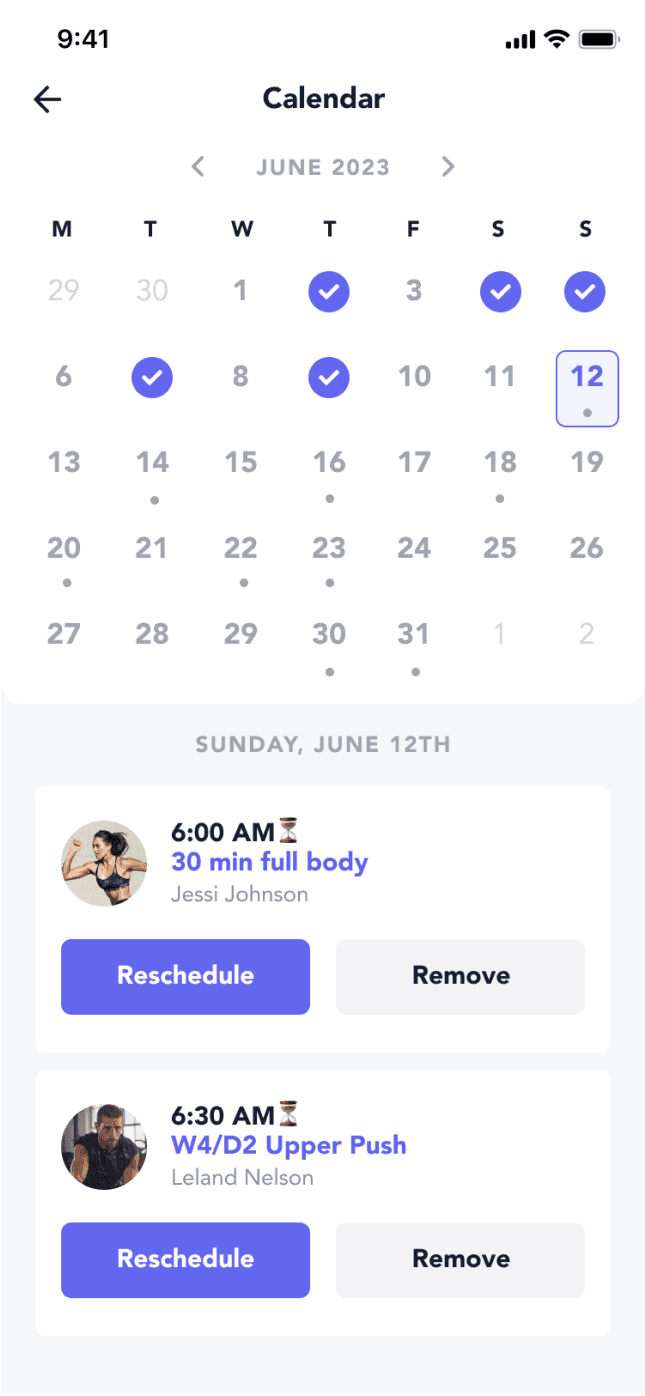

Reminders
Set workout reminders to stay on track!
Frequently asked questions
What makes this app different? How do I know it will work for me?
If you haven’t had success with other workout apps in the past, it’s understandable to be skeptical. But with the right guidance, support, and fresh content, you can achieve the results you want. Instead of static programs or PDFs with no assistance, this platform offers dynamic, interactive workouts. New programs and instructional videos are added regularly to keep you motivated and engaged. Plus, if you ever need help, you can reach out directly for questions, feedback, or to share your progress!
I’m a beginner, is this for me?
No matter where you are in your fitness journey, this platform can help you succeed. Workouts and programs are designed for all fitness levels, with expert guidance every step of the way. You’ll be provided with easy-to-follow videos and clear instructions, ensuring you can perform each exercise safely and effectively.
Do I need to purchase equipment?
It depends on the workout! Make sure to check out each program to see what is required to complete it. No matter what you have access to, there’s something for everyone to help you get in shape!
24/7 customer support
[email protected]
In-app chat support
Stay in touch and get exclusive insights, special offers & more
We only send emails occasionally and we respect your privacy