Caitlin Anderson
-comp.png)
Balance Strength Training Pt. 1
Stage 1 & 2 (weeks 1-8)
Stages 1 & 2 (Weeks 1-8) build your foundation. Focus on movement mastery, proper form, consistent habits, and progressive overload—not straight to heavy weights. We're teaching your nervous system efficient muscle recruitment and preparing your body for progressive challenges ahead. Like building a house, without a solid base, everything after becomes unstable.
/1769374984244_Black%20and%20White%20Minimalist%20Elegant%20Modern%20Typography%20%20Creative%20Studio%20Brand%20Logo%20(21)-comp.png)
About the program
PURPOSE & PHILOSOPHY
Stage 1 & 2 are the cornerstone of your 16-week strength training journey. This phase is specifically designed to introduce your body to structured resistance training. Think of these first four weeks as building the foundation of a house—without a solid base, everything that comes after will be unstable.
The primary focus is movement mastery, neuromuscular adaptation, and establishing consistent training habits rather than lifting heavy weights or pushing to exhaustion. We're teaching your nervous system how to recruit muscle fibers efficiently, ingraining proper movement patterns, and preparing your connective tissues for the progressively challenging work ahead.
/1768772855455_Black%20and%20White%20Minimalist%20Elegant%20Modern%20Typography%20%20Creative%20Studio%20Brand%20Logo%20(3)-comp.png)
/1768774624787_Black%20and%20White%20Minimalist%20Elegant%20Modern%20Typography%20%20Creative%20Studio%20Brand%20Logo%20(5)-comp.png)
/1768776105138_Black%20and%20White%20Minimalist%20Elegant%20Modern%20Typography%20%20Creative%20Studio%20Brand%20Logo%20(6)-comp.png)
Love this app!!! Every workout is challenging and I've had amazing results.
Carrie
Beautiful, user friendly app. truly enjoying having quick access to workouts. makes reaching my goal of daily movement much easier.
Laura
Clear, strightforward, focused workouts that are enjoyable and effective.
Jess
App Features
Reminders
Set workout reminders to stay on track!
Tracking
Track your progress and share it to Instagram
Notes & Logging
Track your weights, time, and reps. Take notes to capture your thoughts when working out
Streaks
Make sure you stay on track with your goals
Favorites
Save your favorite workouts with one tap
Stream Anywhere
Stream to your TV and laptop using Airplay, Chromecast, Firestick and Cast2Web.
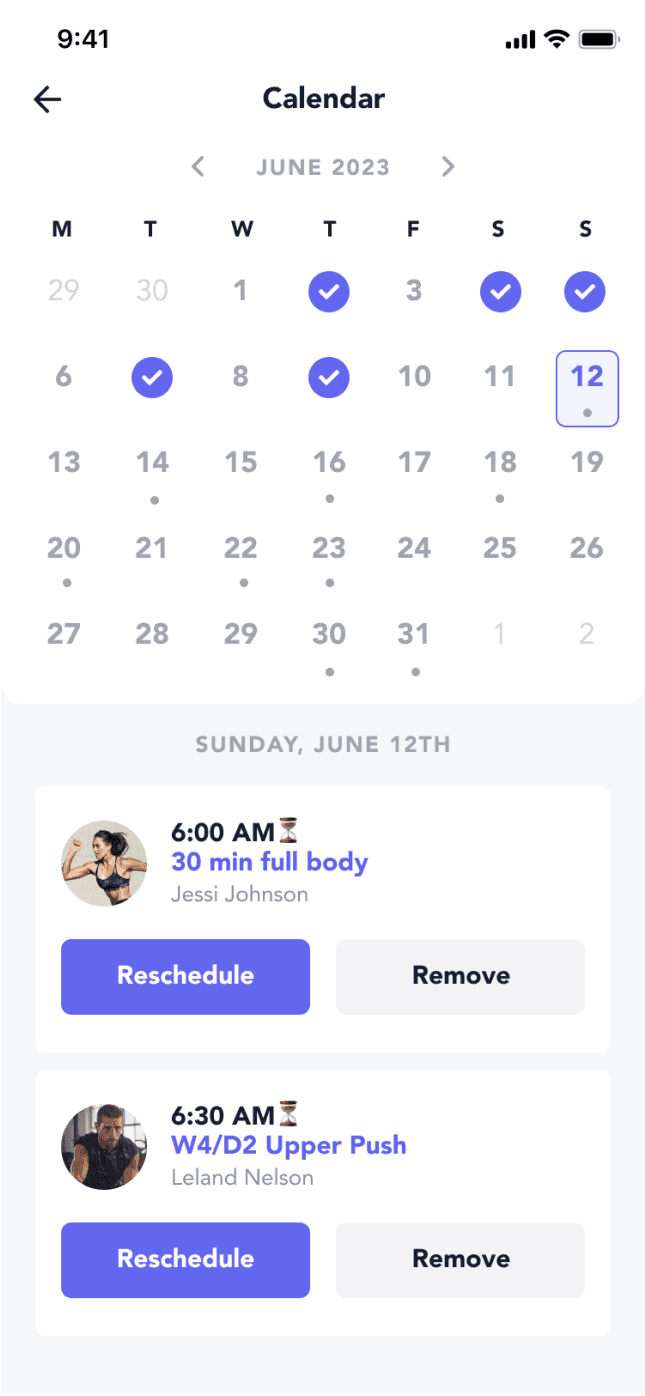

Reminders
Set workout reminders to stay on track!
/1769372859545_Black%20and%20White%20Minimalist%20Elegant%20Modern%20Typography%20%20Creative%20Studio%20Brand%20Logo%20(20)-comp.png)
About Caitlin Anderson
Personal Trainer + Online Coach
I'm Caitlin, an online fitness coach specializing in strength training for weight loss patients. I create comprehensive, science-backed programs designed to preserve and build muscle during weight loss journeys. My approach focuses on accessible, at-home workouts using minimal equipment, with emphasis on proper form, progressive overload, and sustainable habit-building. I work closely with medical professionals to ensure programming complements patients' overall health transformations, helping them lose fat while maintaining the strength and muscle that matters most.
Frequently asked questions
Q: I've never lifted weights before. Is this program right for me?
A: Absolutely! Week 1-4 is specifically designed as a foundation phase for beginners. Start with lighter weights to master the movement patterns, and don't hesitate to use just bodyweight for the first week if needed. The program progressively builds your strength and confidence over 16 weeks.
Q: What equipment do I absolutely need?
A: At minimum, you need:
A set of adjustable dumbbells or multiple dumbbell pairs (ranging from 5-50 lbs, depending on your strength level)
A stable chair or bench
A yoga mat (optional but recommended)
Resistance bands are helpful but optional
Q: What weight dumbbells should I start with?
A: Most people benefit from having 3-4 different weights:
Light: 5-15 lbs (for lateral raises, front raises, some arm work)
Medium: 15-25 lbs (for most upper body work, lunges)
Heavy: 25-50+ lbs (for squats, deadlifts, rows, presses)
Start conservative. If you can complete all reps with perfect form and 3-4 reps left "in the tank," you can increase weight next session.
Q: How long will each workout take?
A: Most sessions take 40-60 minutes including warm-up and cool-down. As you progress through different phases:
Weeks 1-8: 45-55 minutes
Weeks 9-16: 50-65 minutes
Weeks 17-20: 35-50 minutes (circuit/conditioning style)
Weeks 21-24: 50-70 minutes
Q: What if I can only workout 2 days per week instead of 3?
A: While 3 days is optimal, 2 days is still beneficial. Prioritize Days A and B, then alternate adding Day C every other week. You'll still see significant results, though progress may be slightly slower.
Q: Why is the program broken into different phases?
A: Each phase serves a specific purpose:
Phase 1 (Weeks 1-4): Foundation - learning movements, building base strength
Phase 2 (Weeks 5-8): Strength Building - progressive overload begins
Phase 3 (Weeks 9-12): Hypertrophy - muscle building focus
Phase 4 (Weeks 13-16): Strength Emphasis - heavy lifting, power development
Phase 5 (Weeks 17-20): Metabolic Conditioning - work capacity, fat loss acceleration
Phase 6 (Weeks 21-24): Advanced Programming - peak performance
This variation prevents plateaus, keeps you engaged, and maximizes both muscle retention and fat loss.
Q: What are deload weeks and why do I need them?
A: Deload weeks (Weeks 8 and 16) reduce training volume by 40-50% while maintaining intensity. They allow your body to fully recover, reduce injury risk, and actually help you come back stronger. Think of them as strategic rest that enhances long-term progress, not time off.
Q: Can I do cardio on my off days?
A: Yes! Low-to-moderate intensity cardio is encouraged:
Walking (30-60 minutes)
Cycling
Swimming
Yoga
Light hiking
Avoid high-intensity cardio on off days as it may impair recovery. Save intense cardio for the end of strength training days if desired.
Q: What if I miss a workout?
A: Don't try to "make up" missed workouts by doubling up. Simply continue with the next scheduled session. If you miss more than one week, consider repeating that week before moving forward.
Q: I'm on GLP-1 medication and my appetite is very low. How much protein do I really need?
A: Protein is CRITICAL during rapid weight loss to preserve muscle. Aim for 0.8-1g per pound of your goal body weight daily. If you weigh 200 lbs and your goal is 150 lbs, aim for 120-150g protein daily.
Tips for meeting protein goals:
Prioritize protein at every meal
Use protein shakes if whole foods are difficult
Eat protein first before other foods
Consider Greek yogurt, cottage cheese, lean meats, eggs, protein powder
Q: I feel tired and weak during workouts since starting GLP-1. Is this normal?
A: Yes, this is common. You're in a caloric deficit which naturally reduces energy. Strategies to help:
Train earlier in the day when energy is highest
Have a small protein-carb snack 30-60 minutes pre-workout
Reduce weight by 10-15% if needed while maintaining reps
Focus on perfect form over heavy weight
Ensure adequate sleep (7-9 hours)
Stay hydrated (80-100 oz water daily)
Q: Should I reduce my training volume because I'm on a weight loss medication?
A: No! The whole purpose of this program is muscle preservation during weight loss. Reducing volume signals your body it doesn't need that muscle. However, you may need to:
Use slightly lighter weights than someone not in a deficit
Take longer rest periods if needed
Listen to your body and adjust intensity on particularly low-energy days
Q: I'm losing weight fast. How do I know if I'm losing muscle or just fat?
A: Monitor these indicators:
Strength levels: If your weights/reps are maintaining or increasing, you're likely preserving muscle
Body measurements: Track multiple sites, not just scale weight
Visual appearance: Take photos every 2-4 weeks
Energy and performance: Sudden drops may indicate inadequate nutrition
Medical monitoring: Your doctor can order body composition tests
If strength drops significantly or you feel constantly exhausted, discuss increasing calories slightly with your doctor.
Q: How much water should I drink while on this program and GLP-1?
A: Aim for 80-100 oz (2.5-3 liters) minimum daily, more if:
You're exercising
It's hot/humid
You're sweating heavily
You're experiencing constipation (common with GLP-1)
Signs of adequate hydration: clear or light yellow urine, good energy, no headaches.
Q: What does "tempo: 3-1-1-0" mean?
A: Tempo describes the speed of each rep in seconds:
First number (3): Lowering/eccentric phase (3 seconds down)
Second number (1): Pause at bottom (1 second hold)
Third number (1): Lifting/concentric phase (1 second up)
Fourth number (0): Pause at top (no pause)
So 3-1-1-0 means: lower for 3 seconds, pause 1 second, lift for 1 second, no pause at top.
Q: What's the difference between a goblet squat and a front rack squat?
A: Both are squat variations:
Goblet Squat: Hold one dumbbell vertically at chest, both hands cupping the top end
Front Rack Squat: Hold two dumbbells resting on shoulders, elbows pointed forward
Front rack squats typically allow heavier loads and are more advanced.
Q: I can't do push-ups. What should I do?
A: Progress gradually:
Wall Push-Ups: Start standing, hands on wall
Incline Push-Ups: Hands on elevated surface (bench, chair, stairs)
Knee Push-Ups: On knees, maintaining straight line from knees to head
Full Push-Ups: Standard position
Work at whatever level allows 8-10 quality reps. Progress when you can do 15 reps easily.
Q: What's a "superset" or "circuit"?
A:
Superset: Two exercises performed back-to-back with minimal rest, then rest before repeating
Circuit: Multiple exercises (3+) performed back-to-back with minimal rest between exercises, then rest before repeating the circuit
Example Superset:
A1: Goblet Squat x 10 reps
A2: Jump Squat x 8 reps
Rest 2 minutes
Repeat 4 times
Q: How do I know if my form is correct?
A: Key indicators of good form:
No pain (discomfort is okay, sharp pain is not)
Controlled movement throughout
Can maintain the same form on last rep as first rep
Breathing properly (exhale on exertion)
Balanced and stable
Consider filming yourself or working with a trainer for the first few sessions to ensure proper form.
Q: How do I know when to increase weight?
A: Increase weight when you can complete all prescribed sets and reps with 2-3 reps still left "in the tank" and perfect form. Typically increase by:
2.5-5 lbs for upper body exercises
5-10 lbs for lower body exercises
Q: What if I can't complete all the reps with my current weight?
A: That's okay! Some options:
Reduce weight by 5-10 lbs
Complete as many reps as possible with good form, rest 15 seconds, complete remaining reps
Reduce sets by 1
Focus on perfect form over hitting target reps
Never sacrifice form to complete reps.
Q: I'm not seeing the scale move. Should I quit the program?
A: No! Remember:
Muscle is denser than fat (you may be recomposing)
Scale weight is just one metric
Measure progress through: strength gains, how clothes fit, measurements, photos, energy levels
Some weeks weight may stabilize as your body adapts
Focus on non-scale victories: lifting heavier, completing more reps, feeling stronger.
Q: How much muscle can I realistically build during weight loss?
A: This depends on several factors:
Beginners: May build 5-10 lbs of muscle in 6 months even in a deficit
Experienced lifters: May maintain muscle or gain 1-3 lbs over 6 months
Adequate protein and training: Essential for any muscle growth
Rate of weight loss: Slower loss (1-2 lbs/week) better for muscle retention than rapid loss
The primary goal during weight loss is muscle PRESERVATION, with building as a bonus.
Q: When will I start seeing results?
A: Timeline varies:
Weeks 1-2: Neural adaptations, learning movements, slight strength gains
Weeks 3-4: Noticeable strength increases, better mind-muscle connection
Weeks 6-8: Visual changes may begin, clothes fit differently
Weeks 10-12: Clear strength gains, visible muscle definition
Weeks 16-24: Significant transformation, substantial strength gains
Most people notice strength gains before visual changes.
Q: I'm extremely sore after my first few workouts. Is this normal?
A: Yes! DOMS (Delayed Onset Muscle Soreness) is very common when starting a new program, especially in Weeks 1-2. It typically:
Peaks 24-48 hours after exercise
Gradually decreases with consistent training
Is not an indicator of workout effectiveness
Tips to manage soreness:
Stay active with light movement (walking)
Stretch and foam roll
Stay hydrated
Get adequate sleep
Don't skip workouts (light movement helps recovery)
Q: Should I train if I'm still sore?
Generally yes, unless:
Pain is sharp or indicates injury
Soreness is so severe you can't move properly
You have joint pain (not muscle soreness)
Light training actually helps reduce soreness. You can reduce intensity by 20% if needed.
Q: How important is sleep for this program?
A: Extremely important! Sleep is when muscle recovery and growth occur. Aim for:
7-9 hours nightly
Consistent sleep schedule
Quality sleep (cool, dark room)
Poor sleep will:
Reduce strength gains
Impair recovery
Increase injury risk
Reduce fat loss
Increase hunger and cravings
Q: What should I do on rest days?
A: Rest days are active recovery days:
Light walking (30-60 minutes)
Gentle yoga or stretching
Swimming or easy cycling
Foam rolling
Mobility work
Avoid:
Heavy lifting
High-intensity cardio
Long duration intense exercise
Q: I feel more tired after starting this program. Is something wrong?
A: Initially, some fatigue is normal as your body adapts. However, if it persists beyond Week 3-4, check:
Are you eating enough protein?
Are you drinking enough water?
Are you sleeping 7-9 hours?
Is your caloric deficit too aggressive?
Are you overtraining (doing too much additional exercise)?
Consult with your doctor if extreme fatigue persists.
Q: Do I need protein powder?
A: No, but I'd highly recommend it. You can meet protein needs through:
Chicken, turkey, lean beef
Fish (salmon, tuna, cod)
Eggs
Greek yogurt
Cottage cheese
Tofu, tempeh
Protein powder (whey, plant-based)
Protein powder is helpful when appetite is suppressed, and whole foods are difficult to consume.
Q: When should I eat around my workouts?
A: Pre-Workout (60-90 minutes before):
Small meal with protein and carbs
Examples: Greek yogurt with berries, protein shake with banana, eggs with toast
Post-Workout (within 2 hours):
Protein-rich meal
Examples: Chicken with rice, protein shake, salmon with sweet potato
Don't stress if timing isn't perfect. Daily protein total matters most.
Q: Should I take supplements?
A: Speak with your doctor first, but commonly beneficial supplements include:
Highly Recommended:
Protein powder (if struggling to meet goals)
Vitamin D (most people are deficient)
Omega-3 fatty acids
Multivitamin
Evidence-Based Performance Supplements:
Creatine monohydrate (5g daily) - safe, effective for strength
Caffeine (if tolerated) - pre-workout energy
Avoid:
Fat burners
Testosterone boosters
Proprietary blends with hidden ingredients
Q: Can I drink alcohol while on this program?
A: Alcohol can:
Impair muscle recovery
Reduce protein synthesis
Dehydrate you
Add empty calories
Affect sleep quality
If you choose to drink:
Limit to 1-2 drinks maximum
Not on workout days
Stay hydrated
Account for calories
Discuss with your doctor about interactions with GLP-1 medications.
Q: What if I'm vegetarian or vegan?
A: This program works great for plant-based eaters! Focus on protein sources:
Tofu, tempeh, seitan
Legumes (lentils, chickpeas, black beans)
Quinoa
Plant-based protein powder
Nutritional yeast
Nuts and seeds (in moderation)
You may need to be more intentional about hitting protein goals.
Q: I have knee pain. Can I modify the program?
A: Yes! Substitute as needed:
Instead of lunges: Step-ups (shorter range), split squats (stationary)
Instead of squats: Box squats, wall sits, leg press if available
Reduce range of motion: Partial squats, elevated surface lunges
Always consult your doctor about persistent joint pain.
Q: What if I can't do the prescribed reps?
A: Several options:
Reduce weight
Reduce reps to what you can do with good form
Add rest-pause (do reps, rest 15 sec, continue)
Break into smaller sets
Example: If prescribed 3 sets of 12 but you can only do 8:
Do 3 sets of 8, or
Do 3 sets of 10 (working up to 12), or
Do 2 sets of 12 instead of 3
Q: Can I add extra exercises?
A: Generally no, especially not in the first 12 weeks. The program is designed with appropriate volume. Adding exercises can:
Impair recovery
Increase injury risk
Cause overtraining
After Week 12, if you're recovering well, you MAY add 1-2 isolation exercises (bicep curls, calf raises) but keep total workout under 75 minutes.
Q: What if I want to work out 4-5 days per week?
A: The program is designed for 3 days. If you want more activity:
Add walking, yoga, or light cardio on off days
Do mobility/flexibility work
After completing the 24 weeks, consider transitioning to a 4-day split
Resist the temptation to do more. Recovery is when adaptation happens.
Q: Can I do this program if I'm over 50/60/70?
A: Yes! Strength training is beneficial at any age. Consider:
Starting with lighter weights
Taking extra rest days if needed
Focusing more on form than load
Potentially extending each phase by 1-2 weeks
Consulting your doctor before starting
Q: What if I'm not progressing as fast as I'd like?
A: First, check these factors:
Are you eating adequate protein? (0.8-1g per lb goal weight)
Are you sleeping 7-9 hours?
Are you following the program as written?
Are you drinking enough water?
Is your caloric deficit too aggressive? (discuss with doctor)
Progress isn't always linear. Some weeks you'll feel stronger, others you'll maintain. Trust the process.
Q: Should I take progress photos?
A: Yes! Photos reveal changes the mirror and scale don't show. Best practices:
Same location, lighting, time of day
Same poses (front, side, back)
Same clothing (or similar)
Every 2-4 weeks
Don't compare daily/weekly (too much fluctuation)
Frequently asked questions
Q: I've never lifted weights before. Is this program right for me?
A: Absolutely! Week 1-4 is specifically designed as a foundation phase for beginners. Start with lighter weights to master the movement patterns, and don't hesitate to use just bodyweight for the first week if needed. The program progressively builds your strength and confidence over 24 weeks.
Q: What equipment do I absolutely need?
A: At minimum, you need:
A set of adjustable dumbbells or multiple dumbbell pairs (ranging from 5-50 lbs, depending on your strength level)
A stable chair or bench
A yoga mat (optional but recommended)
Resistance bands are helpful but optional
Q: What weight dumbbells should I start with?
A: Most people benefit from having 3-4 different weights:
Light: 5-15 lbs (for lateral raises, front raises, some arm work)
Medium: 15-25 lbs (for most upper body work, lunges)
Heavy: 25-50+ lbs (for squats, deadlifts, rows, presses)
Start conservative. If you can complete all reps with perfect form and 3-4 reps left "in the tank," you can increase weight next session.
Q: How long will each workout take?
A: Most sessions take 40-60 minutes including warm-up and cool-down. As you progress through different phases:
Weeks 1-8: 45-55 minutes
Weeks 9-16: 50-65 minutes
Weeks 17-20: 35-50 minutes (circuit/conditioning style)
Weeks 21-24: 50-70 minutes
Q: What if I can only workout 2 days per week instead of 3?
A: While 3 days is optimal, 2 days is still beneficial. Prioritize Days A and B, then alternate adding Day C every other week. You'll still see significant results, though progress may be slightly slower.
Q: Why is the program broken into different phases?
A: Each phase serves a specific purpose:
Phase 1 (Weeks 1-4): Foundation - learning movements, building base strength
Phase 2 (Weeks 5-8): Strength Building - progressive overload begins
Phase 3 (Weeks 9-12): Hypertrophy - muscle building focus
Phase 4 (Weeks 13-16): Strength Emphasis - heavy lifting, power development
Phase 5 (Weeks 17-20): Metabolic Conditioning - work capacity, fat loss acceleration
Phase 6 (Weeks 21-24): Advanced Programming - peak performance
This variation prevents plateaus, keeps you engaged, and maximizes both muscle retention and fat loss.
Q: What are deload weeks and why do I need them?
A: Deload weeks (Weeks 8 and 16) reduce training volume by 40-50% while maintaining intensity. They allow your body to fully recover, reduce injury risk, and actually help you come back stronger. Think of them as strategic rest that enhances long-term progress, not time off.
Q: Can I do cardio on my off days?
A: Yes! Low-to-moderate intensity cardio is encouraged:
Walking (30-60 minutes)
Cycling
Swimming
Yoga
Light hiking
Avoid high-intensity cardio on off days as it may impair recovery. Save intense cardio for the end of strength training days if desired.
Q: What if I miss a workout?
A: Don't try to "make up" missed workouts by doubling up. Simply continue with the next scheduled session. If you miss more than one week, consider repeating that week before moving forward.
Q: I'm on GLP-1 medication and my appetite is very low. How much protein do I really need?
A: Protein is CRITICAL during rapid weight loss to preserve muscle. Aim for 0.8-1g per pound of your goal body weight daily. If you weigh 200 lbs and your goal is 150 lbs, aim for 120-150g protein daily.
Tips for meeting protein goals:
Prioritize protein at every meal
Use protein shakes if whole foods are difficult
Eat protein first before other foods
Consider Greek yogurt, cottage cheese, lean meats, eggs, protein powder
Q: I feel tired and weak during workouts since starting GLP-1. Is this normal?
A: Yes, this is common. You're in a caloric deficit which naturally reduces energy. Strategies to help:
Train earlier in the day when energy is highest
Have a small protein-carb snack 30-60 minutes pre-workout
Reduce weight by 10-15% if needed while maintaining reps
Focus on perfect form over heavy weight
Ensure adequate sleep (7-9 hours)
Stay hydrated (80-100 oz water daily)
Q: Should I reduce my training volume because I'm on a weight loss medication?
A: No! The whole purpose of this program is muscle preservation during weight loss. Reducing volume signals your body it doesn't need that muscle. However, you may need to:
Use slightly lighter weights than someone not in a deficit
Take longer rest periods if needed
Listen to your body and adjust intensity on particularly low-energy days
Q: I'm losing weight fast. How do I know if I'm losing muscle or just fat?
A: Monitor these indicators:
Strength levels: If your weights/reps are maintaining or increasing, you're likely preserving muscle
Body measurements: Track multiple sites, not just scale weight
Visual appearance: Take photos every 2-4 weeks
Energy and performance: Sudden drops may indicate inadequate nutrition
Medical monitoring: Your doctor can order body composition tests
If strength drops significantly or you feel constantly exhausted, discuss increasing calories slightly with your doctor.
Q: How much water should I drink while on this program and GLP-1?
A: Aim for 80-100 oz (2.5-3 liters) minimum daily, more if:
You're exercising
It's hot/humid
You're sweating heavily
You're experiencing constipation (common with GLP-1)
Signs of adequate hydration: clear or light yellow urine, good energy, no headaches.
Q: What does "tempo: 3-1-1-0" mean?
A: Tempo describes the speed of each rep in seconds:
First number (3): Lowering/eccentric phase (3 seconds down)
Second number (1): Pause at bottom (1 second hold)
Third number (1): Lifting/concentric phase (1 second up)
Fourth number (0): Pause at top (no pause)
So 3-1-1-0 means: lower for 3 seconds, pause 1 second, lift for 1 second, no pause at top.
Q: What's the difference between a goblet squat and a front rack squat?
A: Both are squat variations:
Goblet Squat: Hold one dumbbell vertically at chest, both hands cupping the top end
Front Rack Squat: Hold two dumbbells resting on shoulders, elbows pointed forward
Front rack squats typically allow heavier loads and are more advanced.
Q: I can't do push-ups. What should I do?
A: Progress gradually:
Wall Push-Ups: Start standing, hands on wall
Incline Push-Ups: Hands on elevated surface (bench, chair, stairs)
Knee Push-Ups: On knees, maintaining straight line from knees to head
Full Push-Ups: Standard position
Work at whatever level allows 8-10 quality reps. Progress when you can do 15 reps easily.
Q: What's a "superset" or "circuit"?
A:
Superset: Two exercises performed back-to-back with minimal rest, then rest before repeating
Circuit: Multiple exercises (3+) performed back-to-back with minimal rest between exercises, then rest before repeating the circuit
Example Superset:
A1: Goblet Squat x 10 reps
A2: Jump Squat x 8 reps
Rest 2 minutes
Repeat 4 times
Q: How do I know if my form is correct?
A: Key indicators of good form:
No pain (discomfort is okay, sharp pain is not)
Controlled movement throughout
Can maintain the same form on last rep as first rep
Breathing properly (exhale on exertion)
Balanced and stable
Consider filming yourself or working with a trainer for the first few sessions to ensure proper form.
Q: How do I know when to increase weight?
A: Increase weight when you can complete all prescribed sets and reps with 2-3 reps still left "in the tank" and perfect form. Typically increase by:
2.5-5 lbs for upper body exercises
5-10 lbs for lower body exercises
Q: What if I can't complete all the reps with my current weight?
A: That's okay! Some options:
Reduce weight by 5-10 lbs
Complete as many reps as possible with good form, rest 15 seconds, complete remaining reps
Reduce sets by 1
Focus on perfect form over hitting target reps
Never sacrifice form to complete reps.
Q: I'm not seeing the scale move. Should I quit the program?
A: No! Remember:
Muscle is denser than fat (you may be recomposing)
Scale weight is just one metric
Measure progress through: strength gains, how clothes fit, measurements, photos, energy levels
Some weeks weight may stabilize as your body adapts
Focus on non-scale victories: lifting heavier, completing more reps, feeling stronger.
Q: How much muscle can I realistically build during weight loss?
A: This depends on several factors:
Beginners: May build 5-10 lbs of muscle in 6 months even in a deficit
Experienced lifters: May maintain muscle or gain 1-3 lbs over 6 months
Adequate protein and training: Essential for any muscle growth
Rate of weight loss: Slower loss (1-2 lbs/week) better for muscle retention than rapid loss
The primary goal during weight loss is muscle PRESERVATION, with building as a bonus.
Q: When will I start seeing results?
A: Timeline varies:
Weeks 1-2: Neural adaptations, learning movements, slight strength gains
Weeks 3-4: Noticeable strength increases, better mind-muscle connection
Weeks 6-8: Visual changes may begin, clothes fit differently
Weeks 10-12: Clear strength gains, visible muscle definition
Weeks 16-24: Significant transformation, substantial strength gains
Most people notice strength gains before visual changes.
Q: I'm extremely sore after my first few workouts. Is this normal?
A: Yes! DOMS (Delayed Onset Muscle Soreness) is very common when starting a new program, especially in Weeks 1-2. It typically:
Peaks 24-48 hours after exercise
Gradually decreases with consistent training
Is not an indicator of workout effectiveness
Tips to manage soreness:
Stay active with light movement (walking)
Stretch and foam roll
Stay hydrated
Get adequate sleep
Don't skip workouts (light movement helps recovery)
Q: Should I train if I'm still sore?
Generally yes, unless:
Pain is sharp or indicates injury
Soreness is so severe you can't move properly
You have joint pain (not muscle soreness)
Light training actually helps reduce soreness. You can reduce intensity by 20% if needed.
Q: How important is sleep for this program?
A: Extremely important! Sleep is when muscle recovery and growth occur. Aim for:
7-9 hours nightly
Consistent sleep schedule
Quality sleep (cool, dark room)
Poor sleep will:
Reduce strength gains
Impair recovery
Increase injury risk
Reduce fat loss
Increase hunger and cravings
Q: What should I do on rest days?
A: Rest days are active recovery days:
Light walking (30-60 minutes)
Gentle yoga or stretching
Swimming or easy cycling
Foam rolling
Mobility work
Avoid:
Heavy lifting
High-intensity cardio
Long duration intense exercise
Q: I feel more tired after starting this program. Is something wrong?
A: Initially, some fatigue is normal as your body adapts. However, if it persists beyond Week 3-4, check:
Are you eating enough protein?
Are you drinking enough water?
Are you sleeping 7-9 hours?
Is your caloric deficit too aggressive?
Are you overtraining (doing too much additional exercise)?
Consult with your doctor if extreme fatigue persists.
Q: Do I need protein powder?
A: No, but I'd highly recommend it. You can meet protein needs through:
Chicken, turkey, lean beef
Fish (salmon, tuna, cod)
Eggs
Greek yogurt
Cottage cheese
Tofu, tempeh
Protein powder (whey, plant-based)
Protein powder is helpful when appetite is suppressed, and whole foods are difficult to consume.
Q: When should I eat around my workouts?
A: Pre-Workout (60-90 minutes before):
Small meal with protein and carbs
Examples: Greek yogurt with berries, protein shake with banana, eggs with toast
Post-Workout (within 2 hours):
Protein-rich meal
Examples: Chicken with rice, protein shake, salmon with sweet potato
Don't stress if timing isn't perfect. Daily protein total matters most.
Q: Should I take supplements?
A: Speak with your doctor first, but commonly beneficial supplements include:
Highly Recommended:
Protein powder (if struggling to meet goals)
Vitamin D (most people are deficient)
Omega-3 fatty acids
Multivitamin
Evidence-Based Performance Supplements:
Creatine monohydrate (5g daily) - safe, effective for strength
Caffeine (if tolerated) - pre-workout energy
Avoid:
Fat burners
Testosterone boosters
Proprietary blends with hidden ingredients
Q: Can I drink alcohol while on this program?
A: Alcohol can:
Impair muscle recovery
Reduce protein synthesis
Dehydrate you
Add empty calories
Affect sleep quality
If you choose to drink:
Limit to 1-2 drinks maximum
Not on workout days
Stay hydrated
Account for calories
Discuss with your doctor about interactions with GLP-1 medications.
Q: What if I'm vegetarian or vegan?
A: This program works great for plant-based eaters! Focus on protein sources:
Tofu, tempeh, seitan
Legumes (lentils, chickpeas, black beans)
Quinoa
Plant-based protein powder
Nutritional yeast
Nuts and seeds (in moderation)
You may need to be more intentional about hitting protein goals.
Q: I have knee pain. Can I modify the program?
A: Yes! Substitute as needed:
Instead of lunges: Step-ups (shorter range), split squats (stationary)
Instead of squats: Box squats, wall sits, leg press if available
Reduce range of motion: Partial squats, elevated surface lunges
Always consult your doctor about persistent joint pain.
Q: What if I can't do the prescribed reps?
A: Several options:
Reduce weight
Reduce reps to what you can do with good form
Add rest-pause (do reps, rest 15 sec, continue)
Break into smaller sets
Example: If prescribed 3 sets of 12 but you can only do 8:
Do 3 sets of 8, or
Do 3 sets of 10 (working up to 12), or
Do 2 sets of 12 instead of 3
Q: Can I add extra exercises?
A: Generally no, especially not in the first 12 weeks. The program is designed with appropriate volume. Adding exercises can:
Impair recovery
Increase injury risk
Cause overtraining
After Week 12, if you're recovering well, you MAY add 1-2 isolation exercises (bicep curls, calf raises) but keep total workout under 75 minutes.
Q: What if I want to work out 4-5 days per week?
A: The program is designed for 3 days. If you want more activity:
Add walking, yoga, or light cardio on off days
Do mobility/flexibility work
After completing the 24 weeks, consider transitioning to a 4-day split
Resist the temptation to do more. Recovery is when adaptation happens.
Q: Can I do this program if I'm over 50/60/70?
A: Yes! Strength training is beneficial at any age. Consider:
Starting with lighter weights
Taking extra rest days if needed
Focusing more on form than load
Potentially extending each phase by 1-2 weeks
Consulting your doctor before starting
Q: What if I'm not progressing as fast as I'd like?
A: First, check these factors:
Are you eating adequate protein? (0.8-1g per lb goal weight)
Are you sleeping 7-9 hours?
Are you following the program as written?
Are you drinking enough water?
Is your caloric deficit too aggressive? (discuss with doctor)
Progress isn't always linear. Some weeks you'll feel stronger, others you'll maintain. Trust the process.
Q: Should I take progress photos?
A: Yes! Photos reveal changes the mirror and scale don't show. Best practices:
Same location, lighting, time of day
Same poses (front, side, back)
Same clothing (or similar)
Every 2-4 weeks
Don't compare daily/weekly (too much fluctuation)
24/7 customer support
[email protected]
In-app chat support
Stay in touch and get exclusive insights, special offers & more
We only send emails occasionally and we respect your privacy
POWERED BY PLAYBOOK