
EDUCATIONAL MODULES
Rating 5.0
Deep Core Dynamics
Deep Core Dynamics is structured in three progressive phases designed to take you from foundational basics to more advanced resistance and stability training so you are confident with your breath and core connection.
Whether you’re newly postpartum, managing Diastasis Recti or simply looking to strengthen your core, this program was designed for you!
My goal is you leave feeling stronger in your workouts and daily movements, reduce pressure and pain and cultivate confidence in your body.
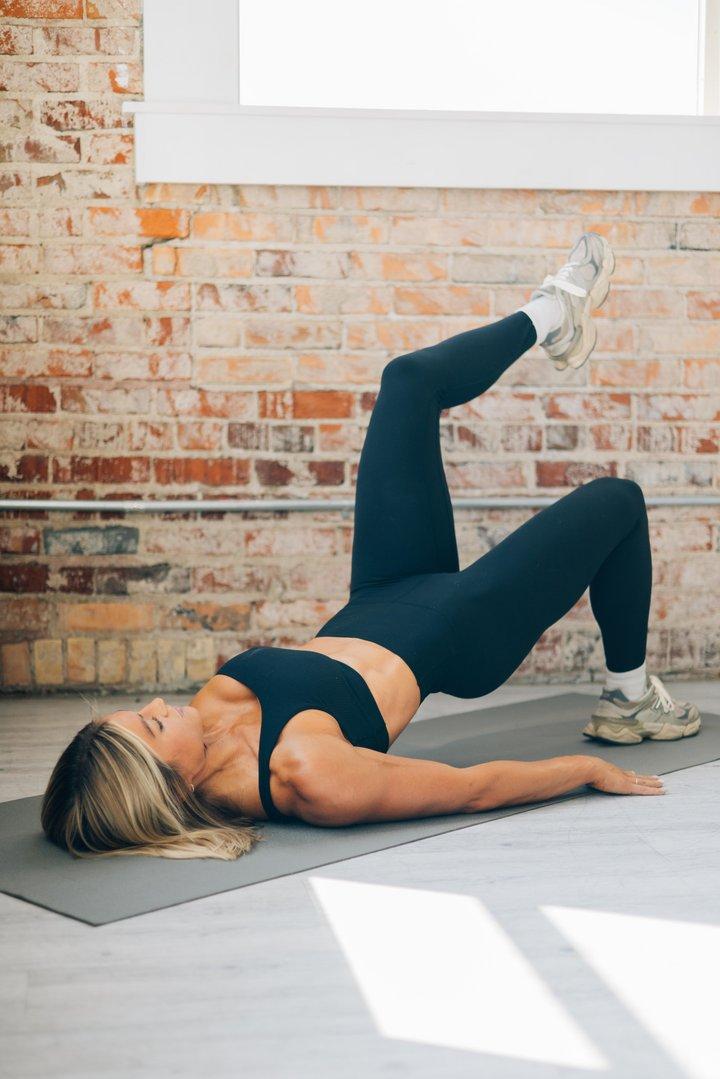
I’m so glad you’re here! This program was created to help you reconnect with your body, rebuild from the inside out and feel strong, supported and stable in everything you do.
Rating 5.0
Rating 5.0
Rating 5.0
Rating 5.0
Rating 5.0

Before moving on to the next day and especially the next phase, make sure you can confidently check off everything on the When to Progress Checklist (on the next page). Progressing too soon can actually slow your healing. Each workout in this program build on the last by gradually increasing the intensity and complexity of the movements while keeping your deep core and pelvic floor engagement the priority. This step-by-step approach ensures your core has a strong foundation before taking on harder challenges. It helps your muscles adapt safely, avoids compensation patterns and minimizes the risk of injury. Remember: Progression isn’t about speed, it’s about control, confidence and consistency. If you’re not ready to move forward yet, you can still increase resistance, add more reps or expand your range of motion. All of these will challenge your core without skipping steps. Be patient with yourself. Steady, intentional work is what creates lasting strength and healing.
Ask yourself these before moving forward to the next phase: 1. Can you feel the connection between your pelvic floor and TVA? You are able to lift your pelvic floor and wrap/draw in your TVA 2. Can you maintain core engagement throughout the entire range of motion? If you lose connection, focus on maintaining it before progressing. 3. Can you breathe properly while keeping core engagement? You are aware of what your core is doing during inhales and exhales 4. Can you keep the connection with both feet off the ground? For example: while lying on your back, lift both legs without feeling your core “push out.” Practice lifting one leg at a time, then progress to both. Place a hand on your core where you have DR to feel for any pushing out (this indicates uncontrolled intra-abdominal pressure). 5. Are you controlling intra-abdominal pressure? There should be no conning or pushing out of your core, especially during movements like dead bugs, heel taps, or leg extensions—these require more advanced core control. 6. Is there any doming or conning during the exercise? If so, scale back to a movement where you can keep control. 7. Is your spine in a neutral position? Your back should not be jammed into the ground or overly arched in your lower back. 8. Are you engaging only your inner core and pelvic floor muscles? Watch for compensation from other muscles, like obliques or hip flexors, which tend to kick in if the inner core is weaker. Once you consistently meet these criteria, you can progress to more traditional exercises. Remember, progress takes time. Be patient with yourself.
A round you are moving from one exercise to the next. Once all exercises are completed in the round you will then take a rest.
ES= each Side. Anytime you see it, it means do the exercise on both the left and right side of your body.
Tempo is the speed of each part of an exercise, shown as 3 numbers (like 2-1-3). The first number is how long it takes to move into the position, the second I show long you hold it and the third is how long it takes to return to starting position.
Each workout should take you 10-20 min.
Yes, you can complete the whole program at home or in the gym, wherever works best for you.
A resistance band, light set of dumbbells and a some sort of ball. It can even be one of your kids toy balls. If you have more great!
Listen to your body first. If something doesn’t feel right, slow it down, reduce the range of motion, move to an incline or drop the weight. I’ll give you audio cues along the way for breath and alignment- so pay attention to those.
Yes 100%! This program is safe during pregnancy and postpartum. Just remember every body and pregnancy is different. Modify when needed and always check in with your provider if you’re unsure.
Diastasis recti and pelvic floor concerns can show up differently for every woman, depending on things like pregnancy, birth, movement habits and even genetics. So results wont look the same for everyone. This Program is designed to help you improve deep core strength, learn and incorporate pressure management through breath and pelvic floor connection. Healing isn’t always about “closing the gap” it’s about restoring full function, strength and confidence in your body.
Many women notice improvements in how they feel! Like better control, less pressure and stronger engagement within just a few weeks. Visible changes like a smaller gap or reduced symptoms happen over time. Consistency is key, the more you integrate it, the more your results will add up over time.
Great question! Signs you’re on track: you feel your core engaging without bulging/doming, your ribs start to feel more “stacked” and daily movements feel easier and less in your back.
Yes! You can easily layer in your current strength workouts.
No specific changes are required for this program, but fueling your body with enough protein, hydration and balanced meals will support the strength your building.
Absolutely! Many people repeat it for another cycle because each round builds upon itself creating more awareness and strength each time you go through it!